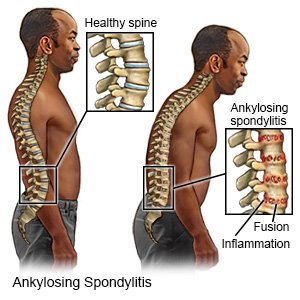
What is Ankylosing Spondylitis?
Ankylosing Spondylitis (AS) is a chronic inflammatory type of arthritis that primarily targets the spine and sacroiliac joints (where the spine connects to the pelvis). Over time, this localized autoimmune inflammation causes the vertebrae to undergo structural bone fusion, leading to severe stiffness, a rigid posture, and reduced spinal flexibility.
As the disease progresses, recurring inflammation triggers the body's natural defense mechanism to generate new bone tissue within the spinal gaps. This can result in a completely stiffened, fused spine, sometimes referred to as a "bamboo spine." Beyond the back, it can cause peripheral joint swelling, chest wall restriction, and systemic inflammation in areas like the eyes.
At Ahmedabad Spine Hospital, treatment focuses on suppressing spinal inflammation, managing chronic lower back pain, preventing joint fusion, and helping patients maintain upright posture and mobility with targeted medical therapies.
Chronic Back Pain
Persistent, dull ache in the lower back and buttocks that worsens during sleep or rest.
Improves with Activity
Severe stiffness that noticeably improves with physical movement and exercise, rather than rest.
HLA-B27 Testing
Targeted genetic profiling alongside advanced spinal MRIs to catch early sacroiliac joint inflammation.
:max_bytes(150000):strip_icc()/yoga-will-train-your-body-to-be-flexible-954650792-d569c2693b6541ca94cc0781a4a2d432.jpg)
Postural Care
Biologic treatments combined with targeted spinal posture exercises to prevent forward-bending deformities.
Common signs and causes of ankylosing spondylitis
Ankylosing Spondylitis symptoms generally begin in early adulthood, appearing as gradual lower back discomfort. Because this condition is inflammatory, the associated pain and severe stiffness are typically at their worst in the morning or during long intervals of inactivity.
Common Signs
- Progressive chronic pain and stiffness in the lower back and buttocks
- Morning back stiffness lasting several hours that eases with a warm shower
- Pain that wakes you up in the second half of the night
- Reduced chest expansion and difficulty taking deep breaths
- Enthesitis, or localized pain where tendons and ligaments attach to bone
- Persistent fatigue and occasional painful eye inflammation (uveitis)
Possible Reasons
- Strong genetic predisposition closely linked to the HLA-B27 gene marker
- Immune system overactivity specifically targeting the spinal joints
- Environmental triggers or gastrointestinal tracking issues that switch on systemic inflammation
- Age-linked onset patterns, with symptoms typically initiating before age 45
- Repeated physical stress or mechanical overload triggering local bone repairs
- Uncontrolled chronic enthesitis leading to new bone formation and fusion

How We Find the Cause
Accurately diagnosing Ankylosing Spondylitis relies on identifying early sacroiliac and spinal inflammation before bony fusion occurs. Our medical team combines specialized genetic screenings, postural clinical assessments, and advanced imaging scans to establish a clear diagnosis.
- Physical assessment to evaluate spinal flexibility, chest expansion, and sacroiliac joint tenderness
- Targeted blood screening for the HLA-B27 genetic marker, present in a majority of AS patients
- Inflammatory marker monitoring via C-Reactive Protein (CRP) and ESR level tests
- High-resolution spinal X-rays to check for classic structural signs like "bamboo spine"
- Advanced pelvic and spinal MRI scans to detect early stage sacroiliitis and joint inflammation
Treatment Options
While Ankylosing Spondylitis requires active medical observation to preserve spinal mobility, our treatment protocols prioritize advanced inflammation suppression, rigorous postural physical therapy, and daily movement strategies.
- Advanced Biologics (TNF inhibitors or IL-17 inhibitors) to target and block spinal inflammatory pathways
- NSAIDs as a foundational therapy to control persistent lower back pain and stiffness
- Tailored spinal physical therapy focusing on extension and core muscle strengthening
- Dedicated breathing exercises to maximize rib cage expansion and preserve lung capacity
- Postural training and ergonomic modifications to prevent permanent forward-leaning deformities
- Low-impact exercises like swimming to keep the entire spinal column flexible and moving
- Surgical consultation for spinal alignment corrections or joint arthroplasty if necessary
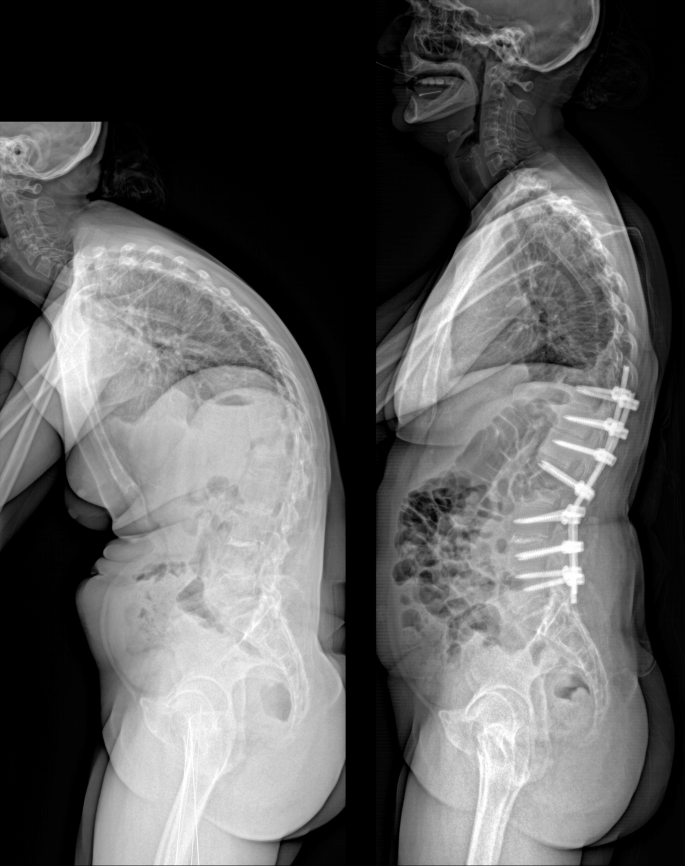
When is surgery needed?
Surgery may be advised if advanced Ankylosing Spondylitis causes severe spinal deformities, restricts a straight field of vision, or if severe inflammatory damage spreads to the hips. Surgical options include a spinal osteotomy to realign a heavily curved spine, stabilization procedures, or total hip replacement (arthroplasty) to restore basic daily mobility and eliminate severe pain.
Who is at risk?
- Individuals carrying the HLA-B27 gene marker, which strongly implies a hereditary link
- Young adults, as the onset of symptoms typically occurs between the ages of 17 and 45
- Men, who frequently develop more severe, progressive spinal fusion over time
- People with a family history of AS or related conditions like psoriatic arthritis and IBD
- Individuals experiencing chronic, unexplained lower back pain during early adulthood
- Patients with recurring bouts of painful eye inflammation (uveitis or iritis)
Why timely treatment matters
Delaying specialized care for Ankylosing Spondylitis allows chronic inflammation to quietly trigger calcification, resulting in irreversible spinal fusion and permanent posture limitations. Early intervention using advanced biological therapies suppresses bone remodeling, safeguards spinal flexibility, and keeps your posture upright and functional.